
When Your Eye Becomes Inflamed Inside

What Is Uveitis?
Uveitis is inflammation inside your eye, specifically in the uvea, the middle layer that includes your iris (colored part), ciliary body (produces fluid), and choroid (blood vessel layer).
Iritis is inflammation specifically of the iris, it’s the most common type of uveitis.
Think of it like your eye having an internal inflammation, similar to arthritis but inside your eye.
Is This Serious?
Yes. Uveitis requires prompt treatment from your eye doctor. Left untreated, it can cause permanent vision loss, glaucoma, cataracts, retinal damage, or even blindness.
But with proper treatment, most people recover fully.
What Causes Uveitis?
Often, we don’t know. Many cases are idiopathic (no identifiable cause).
Common causes include autoimmune diseases: Rheumatoid arthritis, ankylosing spondylitis, lupus, inflammatory bowel disease (Crohn’s, ulcerative colitis), psoriatic arthritis, multiple sclerosis, and sarcoidosis.
Infections: Herpes simplex or zoster, toxoplasmosis, tuberculosis, syphilis, Lyme disease, and cat scratch disease.

Other factors: Eye injury or surgery, certain medications, and sometimes it’s related to HLA-B27 gene (genetic marker).
What Are the Symptoms?
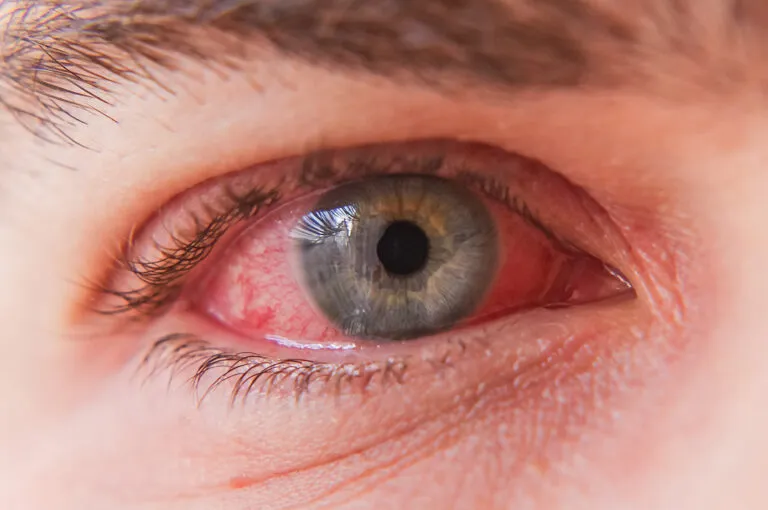
Uveitis comes on suddenly: Eye pain (often aching), redness (especially around the iris), blurred vision, light sensitivity (photophobia) sometimes severe, small or irregular pupil, and floaters (in posterior uveitis).
Key difference from pink eye: Uveitis hurts (pink eye is more itchy or irritated), photophobia is intense, and vision is affected.
This is not pink eye. Don’t wait, call your eye doctor
Are There Different Types?
Yes, classified by location:
ANTERIOR UVEITIS (IRITIS):
- Most common (75% of cases)
- Affects front of eye
- Usually sudden onset
- Symptoms: pain, redness, light sensitivity
- Best prognosis with treatment from your eye doctor
INTERMEDIATE UVEITIS:
- Middle part of eye, often both eyes
- Symptoms: floaters, blurred vision
- More likely related to systemic disease
POSTERIOR UVEITIS:
- Back of eye (retina, choroid)
- More serious
- Symptoms: vision loss, floaters
- Often related to infection
PANUVEITIS
- Entire uvea affected
- Can be severe
- Requires aggressive treatment
For this blog, we’ll focus mainly on anterior uveitis (iritis) since it’s most common.
How Is Uveitis Diagnosed?
Slit Lamp Examination: The key test. Your eye doctor looks for inflammatory cells floating in fluid, checks pupil response, looks for keratic precipitates (inflammatory deposits), and assesses iris and surrounding structures.
Additional Tests: Dilated fundus exam (check back of eye), eye pressure (uveitis can cause high or low pressure), and visual acuity (document vision baseline).
Investigating the Cause: If recurrent or severe, your eye doctor might order blood tests (HLA-B27, ANA, RPR, ACE, Lyme), chest X-ray (check for sarcoidosis, TB), referral to rheumatologist, or infectious disease workup.
Finding the cause helps prevent recurrence
How Is Uveitis Treated by Your Eye Doctor?
Corticosteroid Eye Drops: The mainstay of treatment. Reduces inflammation quickly, started frequently (every 1-2 hours initially), gradually tapered as inflammation resolves. Never stop abruptly, must taper slowly under your eye doctor’s supervision.
Dilating Drops (Cycloplegics): Sounds counterintuitive, but critical. Prevents iris from sticking to lens (posterior synechiae), reduces pain by paralyzing inflamed muscles, and keeps pupils dilated during treatment.
Yes, your vision will be blurry and you’ll need sunglasses. This is temporary and necessary.
Oral Medications (if severe or not responding): Oral steroids, steroid injections around the eye, or immunosuppressive drugs (if chronic).
Treating Underlying Cause: If we identify one: antibiotics (if infectious), antivirals (if herpes-related), or working with your rheumatologist (if autoimmune).
How Long Until I Feel Better?
With treatment: Pain improves within 24-48 hours and full resolution takes 2-6 weeks. Frequent follow-ups with your eye doctor are needed to monitor progress.
Without treatment: Symptoms worsen, risk of permanent damage increases, and vision loss can occur.
Will I Need to Be Monitored?
Yes, closely at first: Appointments every few days initially, weekly as inflammation resolves, and we must ensure complete resolution before stopping treatment.
Stopping treatment too soon = high risk of recurrence.
Your eye doctor is checking inflammation level, eye pressure (steroid drops can increase pressure), for complications, and when to safely taper medications.
Can Uveitis Come Back?
Unfortunately, yes. About 50% of cases recur, especially if you have an underlying autoimmune condition, the first episode was severe, or treatment stopped too quickly.
If it recurs: You’ll recognize symptoms faster, treatment can start sooner, and your eye doctor will investigate more thoroughly for underlying causes
Some people need maintenance treatment to prevent recurrences.
What Are the Complications If Untreated?
Short-term: Posterior synechiae (iris stuck to lens), glaucoma (from inflammation or steroid use), and cataract formation.
Long-term: Macular edema (swelling of central retina), glaucoma damage, band keratopathy (calcium deposits on cornea), and permanent vision loss.
This is why prompt treatment from your eye doctor matters.
Can I Wear Contact Lenses?
Not during active inflammation. Contacts can worsen inflammation, harbor infection, interfere with medication, and cause complications.
Wait until cleared by your eye doctor, usually several weeks after resolution.
Will This Affect My Vision Permanently?
Most people recover fully if treated promptly by their eye doctor. Vision loss is more likely if: treatment was delayed, you have multiple recurrences, you have posterior uveitis (affects retina directly), or complications develop.
Regular monitoring and prompt treatment of recurrences minimize risk.
Do I Need to See a Specialist?
Anterior uveitis (iritis): Most optometrists and ophthalmologists can manage this.
You need a specialist (uveitis specialist or retina specialist) if: You have posterior or panuveitis, you’re not responding to standard treatment, you have recurrent episodes, there are vision-threatening complications, or you need immunosuppressive therapy.
We’ll refer appropriately and co-manage your care.
What If I Have an Autoimmune Disease?
Uveitis is more common if you have ankylosing spondylitis (especially if HLA-B27 positive), juvenile idiopathic arthritis, inflammatory bowel disease, or Behcet’s disease.
Tell your eye doctor about: Your autoimmune diagnosis, current medications, history of joint pain or back stiffness, and any other inflammatory conditions.
We’ll work closely with your rheumatologist.
What Should I Do If Symptoms Return?
Call your eye doctor immediately if you experience: Eye pain, redness, light sensitivity, or blurred vision.
Don’t wait “to see if it gets better.” Early treatment prevents complications.
If you’ve had uveitis before: Your eye doctor may prescribe emergency steroid drops to keep at home for immediate use if symptoms recur (then call us right away).
Questions to Ask Your Doctor
What type of uveitis do I have? Do we know what caused it? How often do I need follow-up? What’s my risk of recurrence? Should I be tested for underlying conditions? What symptoms mean I need urgent care? Do I need to see other specialists?
Living with Uveitis
If you’ve had one episode: Know the symptoms, seek care immediately if they return, keep follow-up appointments with your eye doctor, and report any new joint pain, rashes, or systemic symptoms.
If you have recurrent uveitis: Work with both your eye doctor and primary care or rheumatologist, consider immunosuppressive therapy if frequent, maintain regular monitoring even when asymptomatic, and carry emergency medications if prescribed.
The key: Uveitis is treatable, but timing matters. Fast recognition and prompt treatment from your eye doctor protect your vision
Eye pain, redness, or light sensitivity? These could be signs of uveitis, which requires same-day treatment. Call us immediately, we prioritize urgent eye conditions and can often see you the same day.