
Protecting Your Central Vision
What Is Macular Degeneration?
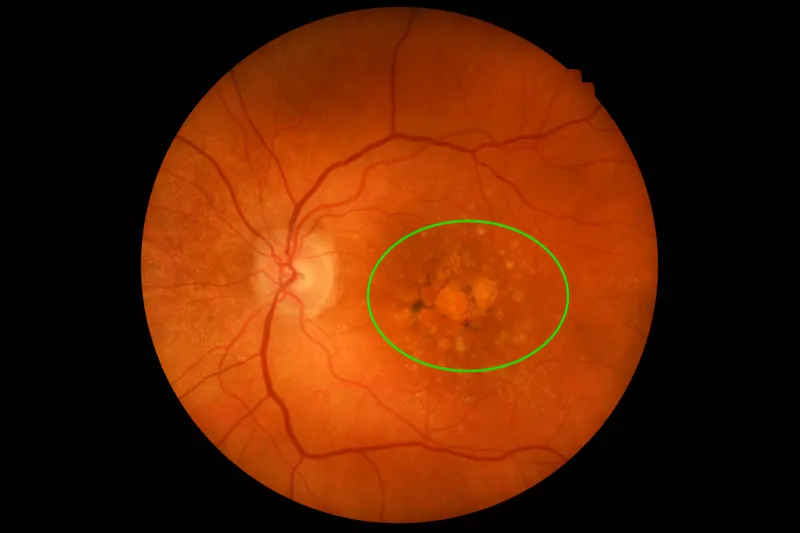
Your macula is the center part of your retina. It’s the tiny spot responsible for sharp, detailed central vision. It’s what you use to read, recognize faces, drive, and see fine details.
Age-related macular degeneration (AMD) damages this area. Imagine looking at a photograph where the center is blurred or missing, but the edges are clear. That’s AMD.
How Common Is This?
AMD is the leading cause of vision loss in Americans over 50. About 11 million people in the U.S. have some form of it, and that number is expected to double by 2050 as our population ages.
Are There Different Types?
Yes, two main types:
1. Dry AMD
Characteristics
85-90% of cases. Thinning of the macula with yellow deposits (drusen) forming under the retina
Speed of Progression
Develops slowly over years
2. Wet AMD
Characteristics
10-15% of cases. Abnormal blood vessels grow under the retina and leak fluid and blood
Speed of Progression
Can develop suddenly
Important note: Dry AMD can turn into wet AMD, which is more serious but treatable if caught quickly by your eye doctor
What Are the Warning Signs?
Early AMD often has no symptoms. As it progresses, you might notice straight lines look wavy or bent (think door frames or window blinds), a dark or blurry spot in the center of your vision, colors seem less vibrant, difficulty reading even with glasses, need for brighter light when reading, or trouble recognizing faces.
Critical warning: If straight lines suddenly look wavy, call your eye doctor immediately. This could indicate wet AMD developing, which requires urgent treatment.
Who's at Risk?
Age is the biggest risk factor, AMD is most common after 60. Smoking doubles your risk and makes it progress faster. Family history increases risk significantly if you have a relative with AMD. It’s more common in Caucasians, and other risk factors include heart disease, high blood pressure, obesity, and prolonged sun exposure without protection.

Can I Prevent AMD?
You can significantly reduce your risk:
#1: Quit smoking : This is the single most important thing you can control.
Eat your greens : Kale, spinach, and collards are packed with protective nutrients (the darker, the better).
Eat fish : Omega-3 fatty acids found in salmon, tuna, and mackerel are protective.
Protect your eyes : Wear UV-blocking sunglasses whenever you’re outside.
Exercise regularly : Good for your eyes and overall health.
Manage blood pressure and cholesterol : These affect your eye health more than you might think.
What About Vitamins?
Yes! For people with intermediate or advanced AMD, specific high-dose vitamins can slow progression. The AREDS2 formula includes Vitamin C, Vitamin E, Lutein, Zeaxanthin, Zinc, and Copper.
Important: These aren’t regular multivitamins. They’re specific formulations proven in large studies. Your eye doctor can recommend the right supplement if you need it.
How Is AMD Treated?
For Dry AMD: AREDS2 vitamins (if moderate or advanced), monitoring with regular exams from your eye doctor, low vision aids if needed, and lifestyle changes.
For Wet AMD: Anti-VEGF injections. Medicine injected into the eye to stop abnormal blood vessel growth. These are given every 4-8 weeks initially. It sounds scary, but the eye is numbed and most patients report minimal discomfort. This treatment is very effective at preserving vision.
Key point: Wet AMD requires prompt treatment by your eye doctor. The sooner we start injections, the more vision we can save.
Will I Go Blind?
AMD rarely causes complete blindness. It affects central vision, but peripheral vision usually remains intact. Most people with AMD can still navigate independently. However, AMD can make reading, driving, and recognizing faces difficult or impossible without help.
What's the Amsler Grid?
It’s a simple at-home monitoring tool. A grid of straight lines with a dot in the center. You check it regularly by covering one eye, looking at the dot, and checking if the lines are straight.
If lines look wavy or you notice missing areas, call your eye doctor immediately. We’ll give you one at your appointment.
How Often Should I Be Checked?
Your monitoring schedule depends on your risk and current status:
- No AMD, low risk: Annual comprehensive exam
- Early AMD: Every 6-12 months
- Intermediate AMD: Every 6 months
- Advanced dry AMD: Every 3-6 months
- Wet AMD: Monthly or as directed during treatment

Can Technology Help?
Yes! Your eye doctor uses advanced imaging including OCT scans (show detailed cross-sections of your retina), fundus photography (documents changes over time), and fluorescein angiography (maps blood vessels if wet AMD is suspected).
These tools help us catch changes early, sometimes before you notice symptoms!
What Questions Should I Ask Your Eye Doctor?
When you visit, ask what type of AMD you have, how advanced it is, whether you should take AREDS2 vitamins, how often you need monitoring, what symptoms should prompt an urgent call, and if you’re a candidate for any clinical trials.
Remember: Early detection and consistent monitoring with your eye doctor are your best defense. AMD is serious, but we have tools to help preserve your vision when we catch it in time
Protect your vision before symptoms appear. Our advanced imaging technology can detectAMD in its earliest stages. Schedule your comprehensive eye exam and ask about our AMD monitoring program.