

Medically reviewed content from Master Eye
If you’re one of the millions of Americans taking a GLP-1 medication like Ozempic, Wegovy, Mounjaro, Zepbound, or Trulicity, you’ve probably heard about the benefits. Better blood sugar control, weight loss, and even heart health improvements.
What you may not have heard is that these medications can also affect your eyes, and that an eye exam should be part of how you manage treatment.
This isn’t a reason to panic, and it’s not a reason to stop taking a medication your doctor prescribed. It is a reason to make sure your eye health is part of the conversation.
What Are GLP-1 Medications?
GLP-1 receptor agonists are a class of prescription medications originally developed to treat type 2 diabetes. They work by mimicking a hormone that regulates blood sugar and appetite.
Several are now also approved or commonly prescribed for weight management. As of 2026, the most widely used GLP-1 medications include semaglutide (Ozempic, Wegovy, Rybelsus), tirzepatide (Mounjaro, Zepbound), liraglutide (Victoza, Saxenda), and dulaglutide (Trulicity).
Roughly 1 in 8 American adults now takes a GLP-1 medication. This is no longer a niche topic; it’s something every eye doctor is seeing in exam chairs every week.
The Eye Health Connection: What Recent Research Shows
The most significant eye-related concern connected to GLP-1 medications goes by the clinical name non-arteritic anterior ischemic optic neuropathy, or NAION for short. It’s uncommon, but it’s worth understanding: NAION happens when blood flow to the optic nerve cuts off abruptly, and the result is usually a sudden loss of vision in one eye, without any pain, that doesn’t reverse on its own.
A 2026 study published in JAMA Ophthalmology, which followed U.S. veterans with type 2 diabetes, found that patients starting semaglutide had roughly double the risk of developing NAION compared to patients starting a different class of diabetes medication (SGLT2 inhibitors), though the overall absolute risk remained low.
Regulatory bodies have taken note: the European Medicines Agency has concluded NAION is a rare potential side effect of semaglutide, estimated to affect up to about 1 in 10,000 users, and the UK’s drug safety regulator issued a similar update in 2026. Some data has suggested a higher relative risk with Wegovy compared to Ozempic, though both contain the same active ingredient.
It’s worth being precise about what this does and doesn’t mean. The American Academy of Ophthalmology and the North American Neuro-Ophthalmology Society have reviewed this evidence jointly and do not recommend that every patient stop taking a GLP-1 medication as a precaution.
The research is still developing, some studies show an association while others don’t, and for many patients, the metabolic, cardiovascular, and weight-related benefits of these medications outweigh a rare risk. What the evidence does support is eye monitoring as a standard part of treatment, not a reason to avoid treatment.
Researchers have also flagged two other patterns worth knowing about:
- Early worsening of diabetic retinopathy. Somewhat counterintuitively, rapid improvement in blood sugar control can temporarily stress the small blood vessels in the retina before long-term benefits set in. This effect is generally seen in the first several months of treatment, and the same improved blood sugar control that causes this short-term effect is what protects the eyes over the long run.
- Progression of age-related macular degeneration in patients who already have the condition.
None of this means GLP-1 medications are unsafe. It means your eyes are an organ affected by rapid metabolic change, the same way your nerves, kidneys, and cardiovascular system are. And like those systems, your eyes benefit from being monitored while your body adjusts.
When You Should Get an Eye Exam
If you’re starting a GLP-1 medication, or already taking one, this matters more if diabetes or macular degeneration is already part of your health picture. That said, the guidance below applies broadly:
- If you haven’t started treatment yet: get a comprehensive, dilated exam sometime in the year leading up to your first dose
- If you’ve already started: get that baseline exam as soon as you can, ideally in your first few weeks on the medication
After that, regular follow-up exams let your optometrist track any changes in your retina or optic nerve over time, rather than discovering a problem only after symptoms appear.
Warning Signs That Need Same-Day Attention
NAION and related complications can develop quickly, often in just one eye, and they typically don’t hurt. That absence of pain is part of what makes them dangerous, since pain is usually what sends people running for care. If you notice any of the following, call an eye doctor that same day instead of putting it on the calendar for your next checkup:
- Sudden vision loss or blurring in one eye, even if it doesn’t hurt
- A dark or dim patch blocking part of what you see. Patients often describe it as a shadow or curtain covering the top or bottom portion of one eye’s vision
- Vision that becomes cloudy or noticeably blurred
- Colors that look faded, washed out, or different than usual
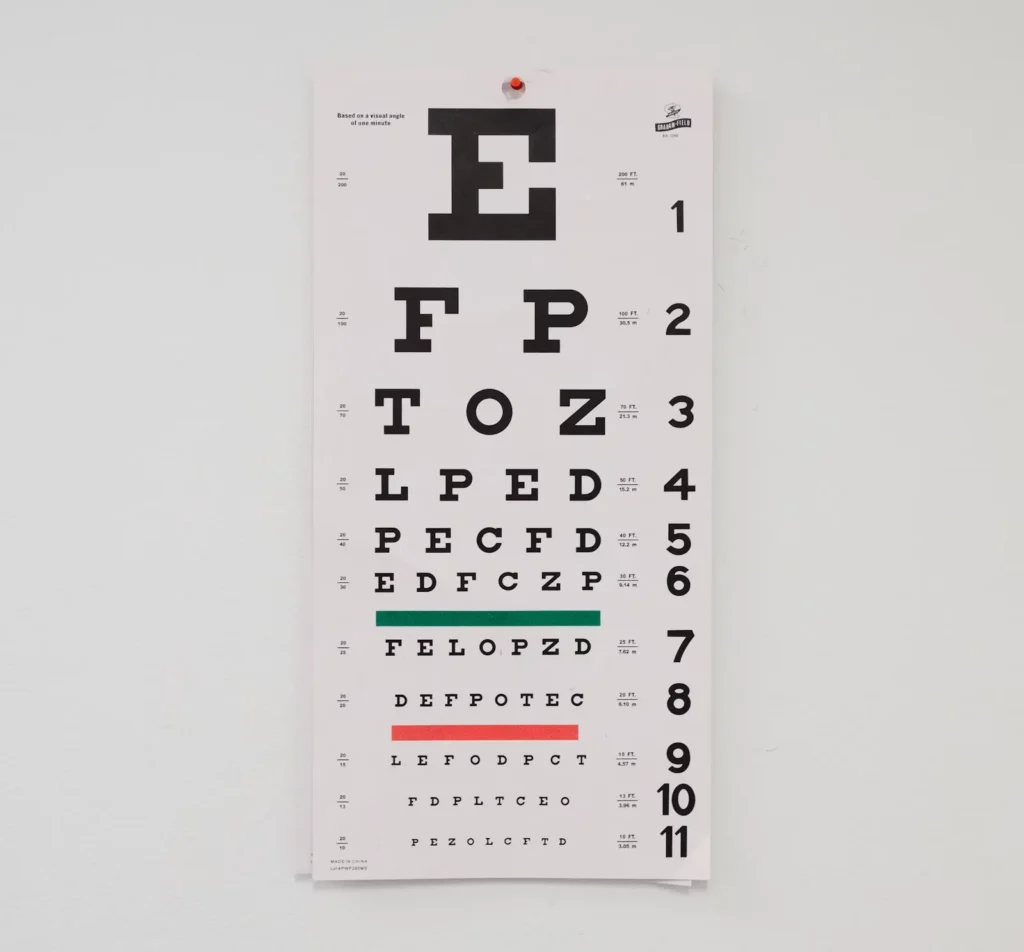
A doctor looking through a dilated pupil can sometimes spot trouble brewing well before you’d ever notice it yourself: a slightly puffy optic nerve, or a few small spots of bleeding tucked into the retina. None of that shows up on a vision chart. It only shows up when someone is actually looking at the back of your eye.
What This Means for Your Care
If you’re taking a GLP-1 medication, the right move isn’t to stop it or to worry your way through every appointment. It’s to make a comprehensive eye exam part of your routine, the same way you’d keep up with bloodwork or a follow-up with your prescribing doctor. Your optometrist can also coordinate directly with your physician or endocrinologist if anything in your exam raises a question worth a closer look together.
At Master Eye, our comprehensive eye exams include retinal imaging and an evaluation of your optic nerve as standard parts of every visit. That means if you’re on a GLP-1 medication, we’re already looking at exactly what matters, without you having to ask for anything extra. If you’re starting treatment soon, already taking one of these medications, or simply due for your annual exam, now is a good time to get a baseline on record.
Schedule a comprehensive eye exam at any of our 9 Central Texas locations. Walk-ins welcome, same-day appointments often available.
Ready to schedule your eye exam?
Whether you are overdue or just keeping up with your annual visit, we make it easy. Same-day and next-day appointments are often available, walk-ins are always welcome, and most insurance plans are accepted.
Book your appointment at Mastereye or just walk in to your nearest location.