

Symptoms, Causes, and Treatment From the Eye Doctors at Master Eye in Austin
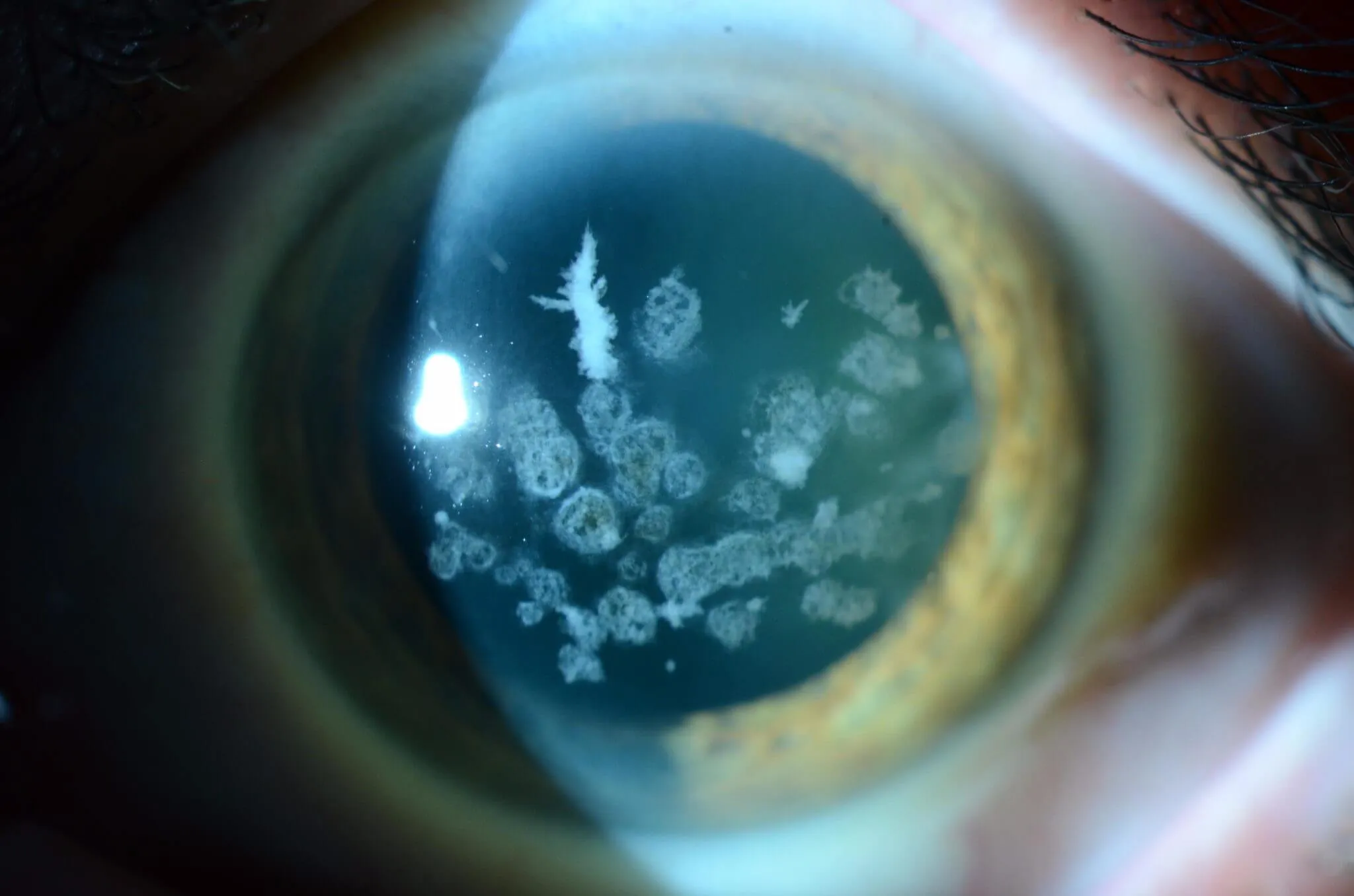
What Is Macular Corneal Dystrophy?
Macular corneal dystrophy (MCD) is a rare, inherited condition where cloudy deposits build up in the cornea’s stroma, leading to progressive haze and blurred vision. It affects both eyes, often beginning in youth or early adulthood, and can gradually reduce clarity over time. EyeWiki+1
Quick clarification: despite the name, this is a cornea condition unrelated to age-related maculardegeneration in the retina.
Common Symptoms
- Blurry or hazy vision that slowly worsens
- Glare and light sensitivity
- Halos at night
- Foreign-body sensation or recurrent surface irritation (less common)
- Gradual difficulty with fine detail and contrast

These come from gray-white stromal opacities and overall corneal haze that expand over time. EyeWiki
What Causes It (and Who’s at Risk)
MCD is autosomal recessive—you inherit a non-working copy of a gene from each parent. Most cases involve changes in CHST6, which disrupt normal keratan sulfate processing in the cornea; the by-products accumulate and create the haze you see clinically. EyeWiki+1
It’s rare in the U.S., but some regions report higher prevalence due to founder effects and consanguinity. EyeWiki
At-Home Care / First Steps
- Don’t rub irritated eyes; use preservative-free lubricating drops if they feel gritty.
- Sunglasses or tinted lenses can help with glare.
- If vision feels worse or you notice new pain/redness, book an eye exam—other conditions can mimic a “cloudy” cornea.
Supportive care can reduce symptoms, but diagnosis and monitoring should happen with an eye-care professional. Cleveland Clinic
How We Diagnose It
We start with a slit-lamp exam to look for the pattern of stromal haze and deposits in each layer. Depending on what we see, we may add anterior segment OCT, topography, or confocal microscopy to map the depth and distribution of deposits and rule out similar dystrophies. EyeWiki
Professional Treatment Options
- Glasses or contacts can sharpen focus when haze is mild.
- Surface comfort: lubricants, lid hygiene, and anti-glare coatings on lenses may reduce symptoms. Cleveland Clinic
- When vision is limited by stromal haze, the evidence-based solution is corneal transplantation:
- Deep Anterior Lamellar Keratoplasty (DALK): replaces diseased stroma while preserving the endothelium; reduces rejection risk for stromal dystrophies and offers strong visual outcomes in many series.
- Penetrating Keratoplasty (PK): full-thickness graft; time-tested and still used, especially when deeper layers are involved or DALK isn’t feasible.
Recurrence can happen years after a transplant, so long-term follow-up matters—even though most patients enjoy many years of improved vision. Nature+1
Research note: scientists are studying enzyme and gene-based approaches for future therapies, but these are not yet standard care. EyeWiki
When to See a Doctor (Same-Day if…)
- Sudden drop in vision, new pain, or redness
- Light sensitivity with watering that worsens
- A visible white/gray spot that seems to grow quickly
- After eye injury or if you wear contacts and develop significant irritation
These red flags may signal active surface problems or infection that need urgent evaluation. Cleveland Clinic
Outlook & How Long It Lasts
MCD tends to progress over years. Many people function well for a long time; when haze meaningfully limits daily tasks, DALK or PK can restore useful clarity for many years, with routine follow-up to watch for graft health or rare recurrence.
Prevention Tips
Because MCD is genetic, there’s no known prevention—but you can protect day-to-day comfort and safety:
- UV-blocking sunglasses for glare and comfort
- Don’t over-wear contact lenses; follow hygiene rules
- Schedule routine eye exams to track corneal clarity and catch changes early
General corneal-health habits help symptoms, even if they don’t change the underlying genetics. Cleveland Clinic
Why Choose Master Eye in Austin
MCD is rare, so you want a team comfortable with diagnosis, monitoring, and timely referral to a corneal surgeon when it’s time. At Master Eye, we provide careful staging with advanced imaging, help you weigh DALK vs. PK with trusted surgical partners, and coordinate your care so recovery is smooth.
👉 If you’ve been told you might have macular corneal dystrophy, schedule an appointment with Master Eye—walk-ins welcome at our nine Austin locations.
FAQ
Macular Corneal Dystrophy
Is macular corneal dystrophy the same as macular degeneration?
No. MCD affects the cornea (the clear front window); macular degeneration affects the retina at the back of the eye. Different tissues, different diseases. EyeWiki
How is it inherited?
It’s typically autosomal recessive: both parents carry one non-working gene copy, and a child inherits both. The gene most often involved is CHST6. EyeWiki+1
Can eye drops cure it?
Drops can ease comfort and glare, but they don’t remove stromal deposits. When vision is limited, corneal transplantation (DALK or PK) is the proven option. Ajo+1
Will it come back after a transplant?
Recurrence is possible many years later, which is why long-term follow-up matters—even though many patients do well for a long time post-surgery. Nature+1
Is MCD contagious?
No—it’s a genetic condition, not an infection. Genetic & Rare Diseases Center